 Cuentos con magia
Ver transcripción original
V.—THE JEZINKAS.
There was a poor orphan lad who had neither father nor mother, and was compelled to go out to service to get his living. He travelled a long way without being able to obtain an engagement, till one day he came to a hovel all by itself under a wood. On the threshold sat an old man, who had dark caverns in his head instead of eyes. The goats were bleating in the stall, and the old man said: ‘I wish I could take you, poor goats, to pasture, but I can’t, I am blind; and I have nobody to send with you.’ ‘Daddy, send me,’ answered the lad; ‘I will pasture your goats, and also be glad to wait upon you.’ ‘Who are you? and what is your name?’ The lad told him all, and that they called him Johnny. ‘Well, Johnny, I will take you; but drive out the goats for me to pasture first of all. But don’t lead them to yon hill in the forest; the Jezinkas will come to you, will put you to sleep, and will then tear out your eyes, as they have mine.’ ‘Never fear, Daddy,’ answered Johnny; ‘the Jezinkas won’t tear out my eyes.’ He then let the goats out of the stall, and drove them to pasture. The first and second day he pastured them under the forest, but the third day he said to himself: ‘Why should I be afraid of the Jezinkas? I’ll drive them where there is better pasture.’ He then broke off three green shoots of bramble, put them into his hat, and drove the goats straight on to the hill in the forest. There the goats wandered about for pasture, and Johnny sat down on a stone in the cool. He had not sat long, when all of a sudden, how it came about he knew not, a beautiful damsel stood before him, all dressed in white, with her hair—raven-black—prettily dressed and flowing down her back, and eyes like sloes. ‘God bless you, young goatherd!’ said she. ‘See what apples grow in our garden! Here’s one for you; I’ll give it you, that you may know how good they are.’ She offered him a beautiful rosy apple. But Johnny knew that if he took the apple and ate it he would fall asleep, and she would afterwards tear out his eyes, so he said: ‘I am much obliged to you, beautiful damsel! My master has an apple-tree in his garden, on which still handsomer apples grow; I have eaten my fill of them.’ ‘Well, if you’d rather not, I won’t compel you,’ said the damsel, and went away. After a while came another, still prettier, damsel, with a beautiful red rose in her hand, and said: ‘God bless you, young goatherd! See what a beautiful rose I’ve just plucked off the hedge. It smells so nice; smell it yourself.’ ‘I am much obliged to you, beautiful damsel. My master has still handsomer roses in his garden; I have smelt my fill of them.’ ‘Well, then, if you won’t, let it alone!’ said the damsel, quite enraged, turned round, and retired. After a while, a third damsel, the youngest and prettiest of them all, came up. ‘God bless you, young goatherd!’ ‘Thank you, beautiful damsel!’ ‘Indeed, you’re a fine lad,’ said the damsel, ‘but you’d be still handsomer if you had your hair nicely combed and dressed. Come, I’ll comb it for you.’ Johnny said nothing, but when the damsel came up to him to comb his hair, he took his hat from his head, drew out a bramble-shoot, and pop! struck her on both hands. The damsel screamed ‘Help, help!’ began to weep, but was unable to move from the place. Johnny cared naught for her weeping, and bound her hands together with the bramble. Then up ran the other two damsels, and, seeing their sister a captive, began to beg Johnny to unbind her and let her go. ‘Unbind her yourselves,’ said Johnny. ‘Alas! we can’t, we have tender hands, we should prick ourselves.’ But when they saw that the lad would not do as they wished, they went to their sister and wanted to unfasten the bramble. Thereupon Johnny leapt up, and pop! pop! struck them too with a spray, and then bound both their hands together. ‘See, I’ve got you, you wicked Jezinkas! Why did you tear out my master’s eyes?’ After this, he went home to his master, and said, ‘Come, daddy, I’ve found somebody who will give you your eyes again.’ When they came to the hill, he said to the first Jezinka, ‘Now tell me where the old man’s eyes are. If you don’t tell me, I shall throw you at once into the water.’ The Jezinka made excuse that she didn’t know, and Johnny was going to throw her into the river, which flowed hard by under the hill. ‘Don’t, Johnny, don’t!’ entreated the Jezinka, ‘and I’ll give you the old man’s eyes.’ She conducted him into a cavern, where was a great heap of eyes, large and small, black, red, blue and green, and took two out of the heap. But when Johnny placed them in the old man’s sockets, the poor man began to cry: ‘Alas, alas! these are not my eyes. I see nothing but owls.’ Johnny became exasperated, seized the Jezinka, and threw her into the water. He then said to the second: ‘Tell me, you, where the old man’s eyes are.’ She, too, began to make excuses that she didn’t know; but when the lad threatened to throw her, too, into the water, she led him again to the cavern, and took out two other eyes. But the old man cried again: ‘Alas! these are not my eyes. I see nothing but wolves.’ The same was done to the second Jezinka as to the first; the water closed over her. ‘Tell me, you, where the old man’s eyes are,’ said Johnny to the third and youngest Jezinka. She, too, led him to the heap in the cavern, and took out two eyes for him. But when they were inserted, the old man cried out again that they were not his eyes. ‘I see nothing but pike.’ Johnny saw that she, too, was cheating him, and was going to drown her as well; but the Jezinka besought him with tears: ‘Don’t, Johnny, don’t! I will give you the old man’s proper eyes.’ She took them from under the whole heap. And when Johnny inserted them into the old man’s sockets, he cried out joyfully: ‘These, these are my eyes! Praise be to God! now I see well again!’ Afterwards Johnny and the old man lived together happily; Johnny pastured the goats, and the old man made cheeses at home, and they ate them together; but the Jezinka never showed herself again on that hill.
📄 Fuente: Sixty Folk-Tales from Exclusively Slavonic Sources
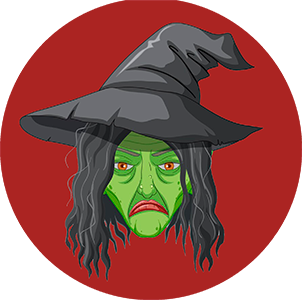

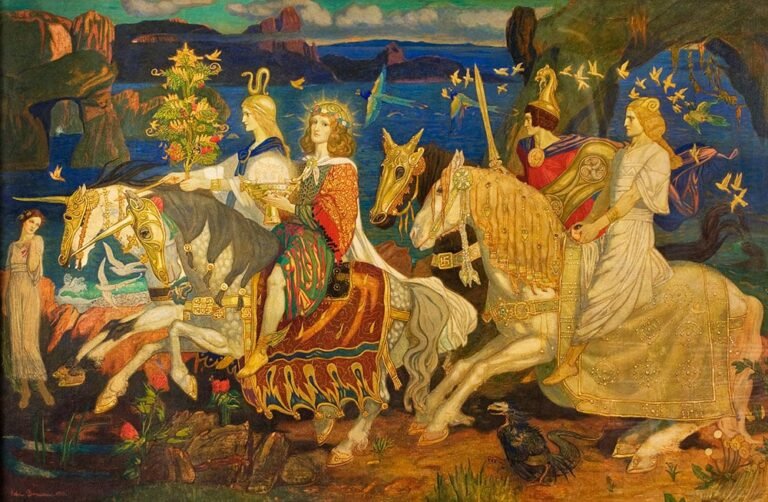
Las Jezinkas, son espíritus malignos del folclore eslavo. Aparecen en los bosques donde engañan a los viajeros con sus encantos y su belleza. Se muestran seductores y encantadoras, pero cuando se duermen, les arrancan los ojos.
Suelen ser varias hermanas, normalmente tres, visten de blanco y son muy hermosas. A veces se traduce como brujas, pero sus poderes son mágicos como las ninfas y están más ligadas a los espíritus o las hadas que a la brujería.
Las Jezinkas
Había una vez un pobre muchacho huérfano que no tenía ni padre ni madre, y se vio obligado a entrar a servir para ganarse la vida. Viajó mucho sin poder conseguir trabajo, hasta que un día llegó a una choza solitaria bajo un bosque. En el umbral se sentaba un anciano, que tenía oscuras cavernas en lugar de ojos. Las cabras balaban en el establo, y el anciano decía:
—Ojalá pudiera llevarlas a pastar, pobres cabras, pero no puedo, estoy ciego; y no tengo a nadie que las saque.
—Abuelito, mándeme a mí —respondió el muchacho—; yo sacaré a pastar sus cabras y también estaré encantado de servirle.
—¿Quién eres tú? ¿Y cómo te llamas?
El muchacho le contó todo, y que lo llamaban Juanito.
—Bien, Juanito, te aceptaré; pero saca primero a pastar a las cabras. Pero no las lleves a aquel cerro del bosque; las Jezinkas vendrán, te dormirán y luego te arrancarán los ojos, como hicieron conmigo.
—No tema, abuelito —respondió Juanito—; las Jezinkas no me arrancarán los ojos.
Entonces soltó a las cabras del establo y las llevó a pastar. El primer y segundo día las pastoreó bajo el bosque, pero el tercer día se dijo:
—¿Por qué he de tener miedo de las Jezinkas? Las llevaré donde hay mejor pasto.
Entonces cortó tres brotes verdes de zarza, los puso en su sombrero y condujo a las cabras directamente al cerro del bosque. Allí las cabras andaban pastando y Juanito se sentó sobre una piedra a la sombra. No llevaba mucho tiempo allí, cuando de pronto, sin saber cómo, apareció ante él una hermosa doncella, toda vestida de blanco, con el cabello negro como ala de cuervo, arreglado con gracia y suelto por la espalda, y ojos como endrinas.
—¡Dios te bendiga, joven pastor! —dijo ella—. ¡Mira qué manzanas crecen en nuestro jardín! Aquí tienes una para que veas lo buenas que son.
Le ofreció una hermosa manzana roja. Pero Juanito sabía que si tomaba la manzana y la comía se quedaría dormido, y ella después le arrancaría los ojos, así que dijo:
—Muchas gracias, hermosa doncella. Mi amo tiene un manzano en su jardín con manzanas aún más hermosas; ya he comido bastantes.
—Bueno, si no quieres, no te obligaré —dijo la doncella, y se marchó.
Al poco rato llegó otra doncella, aún más bonita, con una hermosa rosa roja en la mano, y dijo:
—¡Dios te bendiga, joven pastor! Mira qué rosa tan hermosa acabo de cortar del seto. Huele tan bien; huélela tú mismo.
—Muchas gracias, hermosa doncella. Mi amo tiene rosas aún más bonitas en su jardín; ya he olido bastantes.
—Pues si no quieres, déjalo —dijo la doncella, enfadada, se dio la vuelta y se fue.
Al rato, llegó una tercera doncella, la más joven y la más bella de todas.
—¡Dios te bendiga, joven pastor!
—Gracias, hermosa doncella.
—Eres un buen mozo —dijo la doncella—, pero serías aún más guapo si tuvieras el pelo bien peinado y arreglado. Ven, te lo peinaré.
Juanito no dijo nada, pero cuando la doncella se le acercó para peinarle, se quitó el sombrero, sacó uno de los brotes de zarza y ¡zas!, le dio en ambas manos. La doncella gritó: «¡Ayuda, ayuda!», empezó a llorar, pero no podía moverse del sitio. A Juanito no le importaron sus lágrimas, y le ató las manos con la zarza. Entonces corrieron las otras dos doncellas, y al ver a su hermana prisionera, empezaron a suplicar a Juanito que la desatara y la dejara ir.
—Desatadla vosotras mismas —dijo Juanito.
—¡Ay, no podemos, tenemos las manos delicadas, nos pincharíamos!
Pero cuando vieron que el muchacho no hacía lo que querían, fueron hacia su hermana para soltar la zarza. Entonces Juanito dio un salto y ¡zas, zas! también les golpeó a ellas con otra rama, y luego ató sus manos también.
—¡Ajá! ¡Ahora os tengo, malvadas Jezinkas! ¿Por qué le arrancasteis los ojos a mi amo?
Después, regresó a casa del anciano y le dijo:
—Venga, abuelito, he encontrado a alguien que le devolverá sus ojos.
Cuando llegaron al cerro, le dijo a la primera Jezinka:
—Dime ahora dónde están los ojos del anciano. Si no me lo dices, te arrojaré al agua.
La Jezinka puso excusas diciendo que no lo sabía, y Juanito iba a lanzarla al río que corría cerca del cerro.
—¡No, Juanito, no! —suplicó la Jezinka—. Te daré los ojos del anciano.
Lo condujo a una caverna, donde había un gran montón de ojos: grandes y pequeños, negros, rojos, azules y verdes, y sacó dos del montón. Pero cuando Juanito se los puso al anciano, éste empezó a llorar:
—¡Ay, ay! Estos no son mis ojos. No veo más que búhos.
Juanito se enfadó, agarró a la Jezinka y la lanzó al agua.
Luego dijo a la segunda:
—Dime tú dónde están los ojos del anciano.
Ella también se excusó diciendo que no lo sabía; pero cuando el muchacho amenazó con arrojarla también al agua, lo llevó otra vez a la caverna y sacó otros dos ojos. Pero el anciano volvió a gritar:
—¡Ay! Estos tampoco son mis ojos. No veo más que lobos.
Lo mismo le pasó a la segunda Jezinka que a la primera: el agua la cubrió.
—Dime tú dónde están los ojos del anciano —dijo Juanito a la tercera y más joven Jezinka.
Ella también lo llevó al montón en la caverna y sacó dos ojos para él. Pero cuando se los pusieron, el anciano volvió a decir que no eran los suyos.
—No veo más que lucios.
Juanito vio que ella también lo engañaba y estaba por ahogarla, pero la Jezinka le rogó llorando:
—¡No, Juanito, no! Te daré los ojos verdaderos del anciano.
Los sacó de debajo de todo el montón. Y cuando Juanito se los puso al anciano, éste exclamó con alegría:
—¡Sí, sí, estos son mis ojos! ¡Alabado sea Dios! ¡Ahora vuelvo a ver bien!
Después, Juanito y el anciano vivieron felices; Juanito pastoreaba las cabras, y el anciano hacía quesos en casa, y los comían juntos; pero la Jezinka no volvió a mostrarse jamás por aquel cerro.
Cuento popular checo recopilado por A. H. Wratislaw en Sixty Folk-Tales from Exclusively Slavonic Sources, en 1890