 Cuentos de terror
Ver transcripción original
XX.—THE PLAGUE-SWARM.
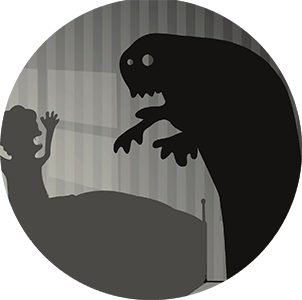
A Ruthenian, having lost his wife and children by the plague, fled into the forest from his desolate cottage and sought safety there. He wandered about all day long; towards evening he constructed a booth of branches, lit a little fire, and fell asleep, wearied out. It was already after midnight when a mighty noise awoke him. He rose to his feet, listened, and heard a kind of songs in the distance, and accompanying the songs a sound of tambourines and fifes. He listened, in no small astonishment, that, when death was raging around, people were rejoicing there so merrily. The noise that he heard kept continually approaching, and the terrified Podolian[8] espied a swarming multitude advancing along a wide road. It was a troop of strange-looking spectres that circled round a carriage; the carriage was black and elevated, and in it sat the Plague. At every step the frightful company kept increasing; for on the road almost everything was transformed into a spectre.
Feebly burned his little fire; a tolerably large firebrand was still smoking a little. Scarcely had the plague-swarm drawn near when the firebrand stood upon feet, extended two arms—the burning part began to glitter with two glaring eyes—it began to sing in concert with the others. The villager was stupefied; in speechless terror he seized his axe and was on the point of striking the nearest spectre, but the axe flew out of his hands, transformed itself into a tall woman with raven-black tresses, and, singing, vanished before his eyes. The plague-swarm proceeded onwards; and the Podolian saw how the trees, the bushes, the owls, the screech-owls, assuming tall shapes, increased the multitude, the terrible harbinger of a frightful death. He fell down powerless, and when in the morning the warmth of the sun awoke him, the vessels that he had brought with him were smashed and broken, the clothes torn to rags, the provisions spoilt. He perceived that no one but the plague-swarm had done him all this mischief, and, thanking God that he had at any rate escaped with life, proceeded further to seek shelter and food.
📄 Fuente: Sixty Folk-Tales from Exclusively Slavonic Sources
Un ruteno, habiendo perdido a su esposa e hijos a causa de la peste, huyó al bosque desde su cabaña desolada buscando refugio. Vagó todo el día; al caer la tarde construyó un pequeño refugio con ramas, encendió un fuego y, agotado, se quedó dormido. Ya pasada la medianoche, un gran estruendo lo despertó. Se puso de pie, escuchó y oyó a lo lejos una especie de canciones acompañadas por el sonido de panderetas y pífanos. No podía creer que, mientras la muerte arrasaba alrededor, la gente celebrara con tanta alegría.
El ruido que escuchaba se acercaba sin cesar, y el aterrorizado podoliano vio acercarse una multitud que avanzaba por un camino ancho. Era una tropa de espectros de aspecto extraño que rodeaban un carruaje; el carruaje era negro y elevado, y en él se sentaba la Peste. A cada paso, la horripilante compañía aumentaba, porque casi todo lo que había en el camino se había transformado en espectro.
Su pequeño fuego apenas ardía; un rescoldo bastante grande aún humeaba un poco. Apenas la hueste de la peste se acercó, el rescoldo se levantó sobre patas, extendió dos brazos —la parte ardiente comenzó a brillar con dos ojos fulgurantes— y comenzó a cantar junto con los demás. El aldeano quedó atónito; aterrorizado y sin poder hablar, agarró su hacha y estuvo a punto de golpear al espectro más cercano, pero el hacha salió volando de sus manos, se transformó en una mujer alta de cabellos negros como el cuervo y, cantando, desapareció ante sus ojos.
La hueste de la peste siguió su camino, y el podoliano vio cómo los árboles, los arbustos, los búhos y los autillos, tomando formas altas, aumentaban la multitud, terrible augurio de una muerte espantosa. Cayó débil y sin fuerzas, y cuando al amanecer el calor del sol lo despertó, vio que los recipientes que había traído estaban rotos, su ropa hecha jirones y sus provisiones estropeadas. Se dio cuenta de que nadie más que la hueste de la peste le había causado todos esos daños y, dando gracias a Dios por haber escapado con vida, siguió adelante buscando refugio y alimento.
Cuento popular polaco, recopilado por A. H. Wratislaw en Sixty Folk-Tales from Exclusively Slavonic Sources, en 1890