 Leyendas y Mitos
Ver transcripción original
THE TALE OF THE GENTLE FOLK
 ET me see. This story begins at the time I climbed down the Andes on the east side and came upon a house by a lake. There were two children living there, one named Juan, the other, his sister, named Juanita, and the boy was seven years old and the girl nine. They had never seen a school, and the nearest house was more than fifty miles away. Still they had books, knew how to read, and I do not think that they ever found the day long. For one thing the lake was not at all deep, and a little bit off from the shore of it was a small island. That was a kind of playground for them, and often they paddled their boat to it in the early morning and stayed there all day.
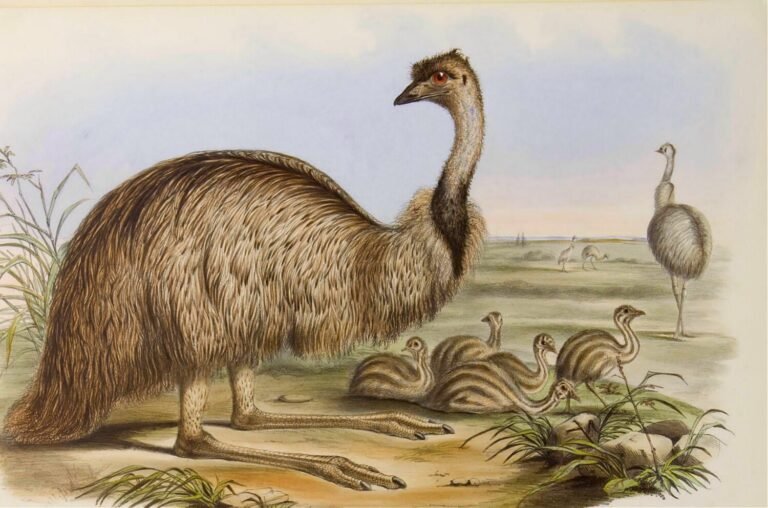
There were other things highly interesting. On the second day that I was there, I saw their tame ostrich, a great gray bird that they had had for two years, and now and then Juan would ride it, Delicia, which was the name of the ostrich, spreading his wings like sails, and running out in a wide zigzag circle on the pampa, caring no more for the light weight on his back than a chicken would care for a fly. Somehow, the birds of that place were no more afraid of the children than the cat is afraid of you, and they knew places where they could see the flamingo with its scarlet cloak, the cowbird all glossy violet, the lapwings making a drumming music, gray and white scissortail with feathers a foot long, and red oven-birds. But their great pet was the huanaco, tall and proud-looking, all yellow and white, like a camel without a hump, about the size of a donkey. They called him Campeón, and he had been on the place as long as the children could remember. Their father, who owned many sheep, had found him when he was no larger than a fox, brought him to the house, and he had become as tame as a pet lamb. Both Juan and Juanita would roll over on him as he lay in the sun, burying their faces in his gold-coloured fur, hugging his long neck, wrestling with him until he got up and walked away to find a quieter place. They would use him as a horse, harnessing him to a little wagon, and all would go well sometimes, but sometimes not so well, for Campeón taking it into his head to run, the wagon would upset, the children roll out on the soft grass, and in a moment Campeón would free himself from the harness, going in great leaps to find a little hill where he would perch himself on the crest and stand like a sentinel.
Now one day the man who was my travelling companion was out with his rifle, and coming upon old Campeón standing on a high rock, took him for a strange and wild animal, and, like many thoughtless men with a gun, followed his impulse and shot. Campeón was badly wounded, and doubtless astonished to receive such treatment from the hands of a man. Anyway he limped on three legs to the house. Juan and Juanita grieved sadly, their parents no less, and all was done for Campeón that could be done. As for my friend, seeing what had happened, he was the most sorrowful of us all. For a time it seemed as though Campeón would get better, but one day he was plainly worse. All that day he rested on the sheltered side of the house, refusing food and water, his finely shaped head proudly upright, his eyes turned to the south, and the next morning there was no sign of him. From the hill on which he had stood we could see for miles and miles, and Juanita and I went there, taking a telescope, and we searched the country far and wide. In the afternoon we saddled horses and rode many, many miles until we came to a belt of sandy soil that ran east and west, and there we saw the trail of our Campeón going straight south. So we turned home sadly enough, for we knew that we would see the gentle beast no more.
And this is why: If you have read the “Arabian Nights,” you will remember, in the story of Sindbad the Sailor, that it is told that he discovered a wonderful valley in which were the bones of hundreds and thousands of elephants. Whether there is any truth or not in that, I do not know, but I do know that in south Patagonia there is a vast valley called the Valley of the Gallegos and there the huanacos go to lay down their bones when they feel the coming of death. And beautiful Campeón, though he had never seen that valley, somehow felt that he must find it, being so wounded and sick, and while we slept that moonlight night, had left us. Both Juan and Juanita knew well enough that they would never see Campeón dead, for they had heard the story of the huanaco valley as often as you have the story of Cinderella. So had I heard it, and that night when we fell to talking about Campeón, a gaucho who looked after the horses told us the story again, and this is what he said:
Long, long ago, when there were giants and before there were horses in this land, there lived a gentle people who did not know sickness or pain or anger. They moved about among the animals and the birds as we move about among the flowers in the garden, and men were much kinder and the maidens more graceful and beautiful than any on the earth to-day. The colours of the birds were brighter and the scent of the flowers sweeter than now; the sun was never too hot nor the wind too cold. What was more wonderful, the Gentle People had a strange power by means of which they could change flowers into living things which turned to bright-coloured birds.
Now and then there would be great gatherings, when all the Gentle People would come together before their prince who sat on a throne decked with precious stones. And the people who loved him for his wisdom as well as for his goodness brought to him at such times gold and silver and diamonds and rubies and glittering precious stones, and these he would give to the young people to play with, for in those days people loved things for their beauty alone. The birds and animals too would join in the gathering, and the air would be full of song and colour and the scent of woods and flowers. On that day each person there would have his or her wish granted, whatever it was. To be sure, where was so much that was good, it seemed hard to wish for anything at all.
There was one thing only that was forbidden to the Gentle People, which was to go north until they saw no more the stars of the Southern Cross in the sky, for after many days’ journey, they were told, there was a great dark forest on the other side of which were fierce men who did evil. But one day one of the Gentle People saw a strange bird, more beautiful than anything ever seen, a bird whose breast shone green and blue and gold, with a tail of long feathers white as ivory. Capa it was who saw the bird, and it seemed strange to him that seeing him the bird flew away. Never before had he seen a bird that he could not touch and hold, and the more the bird avoided him the more eager was he to take it to the prince. So he followed it as it went from place to place, always thinking that at last the strange bird would allow him to draw near. That it feared him he never knew, for his people knew no fear, neither did the animals nor birds that lived among them. At last the bird led him to the edge of the forest, and when he looked into the sky that night he saw new stars there, at which he wondered. Into the forest he went, always following the bird, and so tall and thick were the trees that the sun did not shine and the stars were blotted out at night.
Then one day he came to a place where he saw men with yellow skins and teeth like a dog, who gathered about him. Never before had he seen such people, who tore animals apart and ate of the flesh, who tore skins from living creatures and wore them on their own bodies. To make matters worse, these yellow-skinned ones seized Capa and took from him his glorious robes of gold and silver thread, tore the feathers from his hair and plucked away the ruby that he wore for its beauty. Then, greatly to his surprise, they fell on one another, fighting for the things that they had taken from Capa, so that the very robe they struggled for was torn and trampled under foot. At that Capa turned and fled back through the forest, never stopping day or night, until he came to his own people.
Straight to the prince he went and told his tale, hearing which, the prince was sad at heart.
“You have,” he said, “been where there are greed and selfishness and avarice, and it is bad for us. For those of the yellow skin will not rest until they have found us and brought sorrow into our midst.”
Then he called all his people together and they came, as they always did, singing and dancing and bearing flowers, and after them came the birds and animals, skipping and flying, calling. But a great silence fell upon all when they saw their Golden Prince, for his eyes were grave.
So he told the Gentle People all that Capa had seen, and Capa himself stood by the side of his prince and sang a sad song, so that the people knew of the evil on the other side of the dark forest, and the hearts of the Gentle People were as heavy as was the heart of the Golden Prince. And the prince told them that if they chose, he would arm them and lead them so that they could go forth and fight against the yellow-faced men when they came, “but,” he went on to say, “having learned to fight and to do hurt and to bring death, then you yourselves will turn on each other, will bring death to your own people. You will turn against the animals and they will turn against you. You will walk the land alone, and all things will avoid and hide from you. These things of the earth, these bright and shining things which to-day you take or leave as you wish, you will play with no more, but will hide in boxes and under stones so that others may not see them.” When he said this last he picked up a handful of diamonds and rubies, of emeralds and gold dust, and poured them from one hand to another, so that it was as a cascade that fell bright and dazzling in the sunlight.
Fearing that, the Gentle Folk looked at one another, and there was no doubt in their minds. “Far better,” said they, “is it that we should change in some manner and flee away than that we should do evil to the birds and beasts that are our friends.”
Then the Golden Prince called on his people to follow him, and as the yellow man broke through the forest as he had said they would, he led all of them away swiftly, and the multitude of animals and birds followed them. Having arrived at a great valley where was a river, he told his people that he would change their form so that they would become for a time other creatures, but creatures that would neither bite nor scratch nor spit poison, nor do any kind of harm. So he changed them into huanacos, animals of proud and graceful carriage, and their dress was of red and white like the gold and silver they wore. Then when he saw his people thus, friends of the birds and animals they loved, he changed himself into one also, but greater and more beautiful than any.
But there was a memory of that time, and even to this day when a herd of huanacos is seen, there also is one standing on a high rock as sentinel, keeping watch for the yellow men. And when at last the prince huanaco died, he died in the valley; seeing which, each of his people also laid down their bones in that place, as you may read in many books. So must it be until each and every huanaco has passed away. Yet remember this: Where dies a huanaco, there springs up a flower blue as the sky, its petals all gold-tipped. And when the day comes in which the last huanaco dies, then the yellow men will be gone. On that day each flower will bend to its neighbour and, at a word, there will stand a great host, for the spirit of the huanaco is in the flower that is blue and gold-tipped. Then, for ever and ever, the Gentle People will again have their land, and kindness and gentleness and beauty and joy will be theirs once more.
📄 Fuente: Tales from silver lands

Déjeme ver. Esta historia comienza cuando bajé los Andes por el lado este y encontré una casa junto a un lago. Allí vivían dos niños: uno llamado Juan y su hermana, llamada Juanita. Juan tenía siete años y Juanita nueve. Nunca habían visto una escuela, y la casa más cercana estaba a más de ochenta kilómetros de distancia. Aun así, tenían libros, sabían leer, y no creo que lograran pasar el día entero aburridos. Para empezar, el lago no era muy profundo, y un poco alejado de la orilla había una pequeña isla. Era como un patio de recreo para ellos, y a menudo remaban hasta allí en su bote temprano en la mañana para quedarse todo el día.
Había otras cosas muy interesantes. El segundo día que estuve allí, vi a su manso avestruz, un gran pájaro gris que tenían desde hacía dos años. De vez en cuando, Juan montaba a Delicia —que así se llamaba el avestruz—, extendiendo sus alas como velas y corriendo en un amplio círculo en zigzag por la pampa, sin importarle el peso ligero sobre su espalda más de lo que un pollo se preocuparía por una mosca. De algún modo, los pájaros de aquel lugar no tenían más miedo a los niños que el gato te tiene a ti, y conocían lugares donde podían ver al flamenco con su manto escarlata, al tordo violeta brillante, a las avefrías tocando tambores, a la cola de tijera gris y blanca con plumas de un pie de largo, y a los horneros rojos. Pero su gran mascota era el huanaco, alto y de aspecto orgulloso, todo amarillo y blanco, como un camello sin joroba, del tamaño de un burro. Lo llamaban Campeón y estaba en el lugar desde que los niños tenían uso de razón. Su padre, que era dueño de muchas ovejas, lo encontró cuando no era más grande que un zorro, lo trajo a casa y se volvió tan manso como un cordero. Tanto Juan como Juanita se revolcaban sobre él mientras yacía al sol, enterrando sus rostros en su pelaje dorado, abrazando su largo cuello, y luchando con él hasta que se levantaba y se alejaba en busca de un lugar más tranquilo. Lo usaban como caballo, lo enjaezaban a una carreta, y todo iba bien a veces, y otras no tanto: a Campeón se le metía en la cabeza correr, la carreta se volcaba, los niños rodaban por el suelo blando, pasto, y en un momento Campeón se liberaba de los arneses, dando grandes saltos hasta encontrar un cerrito donde se encaramaba en la cresta y se ponía como centinela.
Un día, el hombre que era mi compañero de viaje salió con su rifle y, al encontrar al viejo Campeón parado en una roca alta, lo tomó por un animal extraño y salvaje y, como muchos hombres irreflexivos armados, siguió su impulso y disparó. Campeón quedó gravemente herido y, sin duda, asombrado de recibir tal trato de manos de un hombre. De todos modos, cojeó sobre tres patas hasta la casa. Juan y Juanita lloraron tristemente, y sus padres no menos; por Campeón se hizo todo lo que se podía hacer. En cuanto a mi amigo, al ver lo sucedido, se puso más triste que todos nosotros. Por un tiempo pareció que Campeón mejoraría, pero un día claramente empeoró. Ese día descansó en el lado protegido de la casa, rechazando comida y agua, con su cabeza finamente formada orgullosamente erguida, sus ojos vueltos hacia el sur, y a la mañana siguiente no había ni rastro de él. Desde la colina en la que él había estado podíamos ver millas y millas, y Juanita y yo fuimos allí, tomando un telescopio, y buscamos por todo el país. Por la tarde ensillamos caballos y cabalgamos muchas, muchas millas hasta que llegamos a una franja de suelo arenoso que corría de este a oeste, y allí vimos el rastro de nuestro Campeón que iba directo hacia el sur. Así que volvimos a casa bastante tristes, porque sabíamos que no volveríamos a ver a la gentil bestia.
Y es por esto: si has leído Las mil y una noches, recordarás, en la historia de Sindbad el Marino, que se cuenta que descubrió un maravilloso valle en el que se encontraban los huesos de cientos y miles de elefantes. Si hay algo de cierto o no en eso, no lo sé, pero sí sé que en la Patagonia sur hay un vasto valle llamado Valle de los Gallegos, y allí van los huanacos a depositar sus huesos cuando sienten la llegada de la muerte. Y el hermoso Campeón, aunque nunca había visto aquel valle, de algún modo sintió que debía encontrarlo, estando tan herido y enfermo, y mientras dormíamos aquella noche de luna, nos había dejado. Tanto Juan como Juanita sabían muy bien que nunca verían muerto a Campeón, pues habían oído la historia del valle de los huanacos tantas veces como se oye la historia de Cenicienta. Así lo había oído yo, y esa noche, cuando nos pusimos a hablar de Campeón, un gaucho que cuidaba los caballos nos volvió a contar la historia, y esto fue lo que dijo:
Hace mucho, mucho tiempo, cuando había gigantes y antes de que hubiera caballos en esta tierra, vivía un pueblo amable que no conocía la enfermedad, ni el dolor, ni la ira. Se movían entre los animales y los pájaros como nosotros nos movemos entre las flores del jardín, y los hombres eran mucho más amables y las doncellas más gráciles y hermosas que cualquiera en la tierra hoy. Los colores de los pájaros eran más brillantes y el aroma de las flores más dulce que ahora; el sol nunca era demasiado caliente ni el viento demasiado frío. Lo que era más maravilloso, la Gente Gentil tenía un extraño poder mediante el cual podían transformar las flores en seres vivos que se convertían en pájaros de colores brillantes.
De vez en cuando había grandes reuniones, cuando toda la Gente Gentil se reunía ante su príncipe, que estaba sentado en un trono adornado con piedras preciosas. Y la gente que lo amaba tanto por su sabiduría como por su bondad le traía en esos momentos oro, plata, diamantes, rubíes y piedras preciosas relucientes, y él se los daba a los jóvenes para que jugaran con ellos, porque en aquellos días la gente amaba las cosas sólo por su belleza. Los pájaros y los animales también se unían a la reunión, y el aire se llenaba de cantos, colores y aromas de bosques y flores. Ese día a cada persona allí se le concedía su deseo, cualquiera que fuera. Sin duda, donde había tantas cosas buenas, parecía difícil desear algo en absoluto.
Sólo había una cosa que estaba prohibida a la Gente Gentil, que era ir al norte hasta que no vieran más las estrellas de la Cruz del Sur en el cielo, porque después de muchos días de viaje, les dijeron, había un gran bosque oscuro. Al otro lado había hombres feroces que hacían el mal. Pero un día, uno del Pueblo Gentil vio un pájaro extraño, más hermoso que cualquier cosa jamás vista, un pájaro cuyo pecho brillaba verde, azul y dorado, con una cola de largas plumas blancas como el marfil. Capa fue quien vio el pájaro, y le pareció extraño que al verlo el pájaro se fuera volando. Nunca antes había visto un pájaro que no pudiera tocar y sostener, y cuanto más lo evitaba, más ansioso estaba por llevárselo al príncipe. Así que lo siguió mientras iba de un lugar a otro, pensando siempre que por fin el extraño pájaro le permitiría acercarse. Nunca supo que le temía, porque su pueblo no conocía el miedo, ni tampoco los animales ni los pájaros que vivían entre ellos. Finalmente, el pájaro lo llevó hasta el borde del bosque, y cuando miró al cielo esa noche vio allí nuevas estrellas, lo que le hizo maravillarse. Se internó en el bosque, siempre siguiendo al pájaro, y los árboles eran tan altos y espesos que el sol no brillaba y las estrellas se ocultaban por la noche.
Entonces, un día, llegó a un lugar donde vio hombres de piel amarilla y dientes como de perro, que se reunieron a su alrededor. Nunca antes había visto gente así, que despedazaban animales y comían su carne, que arrancaban pieles de seres vivientes y las vestían sobre sus propios cuerpos. Para empeorar las cosas, estos de piel amarilla agarraron a Capa y le quitaron sus gloriosas túnicas de hilo de oro y plata, le arrancaron las plumas del cabello y le quitaron el rubí que por su belleza llevaba. Luego, para su gran sorpresa, cayeron unos sobre otros, luchando por las cosas que le habían quitado a Capa, de modo que la misma túnica por la que luchaban fue desgarrada y pisoteada. Ante eso, Capa se dio vuelta y huyó a través del bosque, sin detenerse ni de día ni de noche, hasta llegar a su propia gente.
Directamente al príncipe fue y le contó su historia, al oír lo cual el príncipe se entristeció en el corazón.
—Has estado —dijo— donde hay egoísmo, avaricia y codicia, y eso es malo para nosotros. Porque los de piel amarilla no descansarán hasta que nos hayan encontrado y hayan traído el dolor entre nosotros.
Luego convocó a todo su pueblo y vinieron, como siempre, cantando y bailando y llevando flores, y detrás de ellos vinieron los pájaros y los animales, saltando y volando, cantando. Pero un gran silencio cayó sobre todos cuando vieron a su Príncipe Dorado, porque sus ojos estaban graves.
Entonces les contó a la Gente Gentil todo lo que Capa había visto, y el propio Capa se paró al lado de su príncipe y cantó una canción triste, para que la gente supiera del mal al otro lado del bosque oscuro, y los corazones de la Gente Gentil eran tan pesados como el corazón del Príncipe Dorado. Y el príncipe les dijo que si querían, los armaría y los guiaría para que pudieran salir a luchar contra los hombres de piel amarilla cuando vinieran, “pero —continuó diciendo—, habiendo aprendido a luchar y hacer daño y traer muerte, entonces vosotros mismos os volveréis unos contra otros, traeréis muerte a vuestro propio pueblo. Os volveréis contra los animales y ellos se volverán contra vosotros. Caminaréis solos por la tierra y todas las cosas os evitarán y se esconderán. Estas cosas de la tierra, estas cosas brillantes y resplandecientes que hoy tomáis o dejáis como queráis, no jugaréis más con ellas, sino que las esconderéis en cajas y debajo de piedras para que otros no las vean.” Dicho esto último, tomó un puñado de diamantes y rubíes, de esmeraldas y polvo de oro, y los derramó de una mano a la otra, de modo que fue como una cascada brillante y deslumbrante a la luz del sol.
Temiendo eso, los gentiles se miraron unos a otros y no tenían ninguna duda.
—Es mucho mejor —dijeron— que cambiemos de alguna manera y huyamos a hacer mal a los pájaros y bestias que son nuestros amigos.
Entonces el Príncipe Dorado llamó a su pueblo para que lo siguiera, y cuando el hombre amarillo atravesó el bosque como había dicho que harían, se los llevó a todos rápidamente, y la multitud de animales y pájaros los siguió. Habiendo llegado a un gran valle donde había un río, les dijo que cambiaría su forma para que se convirtieran por un tiempo en otras criaturas, pero criaturas que no morderían ni arañarían ni escupirían veneno, ni harían ningún tipo de daño. Y los transformó en huanacos, animales de porte orgulloso y gracioso, y sus vestidos eran rojos y blancos como el oro y la plata que llevaban. Entonces, cuando vio a su pueblo así, amigo de las aves y de los animales que amaban, se transformó en uno también, pero más grande y más hermoso que todos los demás.
Pero había un recuerdo de aquella época, y hasta el día de hoy, cuando se ve una manada de huanacos, también hay uno parado en una roca alta como centinela, vigilando a los hombres amarillos. Y cuando al fin murió el príncipe huanaco, murió en el valle; y viendo eso, también cada uno de su pueblo puso sus huesos en aquel lugar, como se puede leer en muchos libros. Así debe ser hasta que todos y cada uno de los huanacos hayan fallecido. Sin embargo, recuerda esto: donde muere un huanaco, brota una flor azul como el cielo, con todos sus pétalos con puntas doradas. Y cuando llegue el día en que muera el último huanaco, entonces los hombres amarillos se habrán ido. Ese día cada flor se inclinará ante su vecina y, a una palabra, se levantará una gran hueste, porque el espíritu del huanaco está en la flor que es azul y tiene la punta dorada. Entonces, por los siglos de los siglos, el Pueblo Gentil volverá a tener su tierra, y la bondad, la gentileza, la belleza y la alegría serán suyas una vez más.
Cuento popular de origen Latinoamericano, recopilado por Charles Joseph Finger (1869-1941) en Tales from silver lands, 1924