 Cuentos con magia
 Leyendas y Mitos
Ver transcripción original
THE MAGIC BALL
(A Tale of the Chuput Country)
 COLD-EYED witch lived in the Cordilleras and when the first snow commenced to fall she was always full of glee, standing on a rock, screaming like a wind-gale and rubbing her hands. For it pleased her to see the winter moon, the green country blotted out, the valleys white, the trees snow-laden, and the waters ice-bound and black. Winter was her hunting time and her eating time, and in the summer she slept. So she was full of a kind of savage joy when there were leaden clouds and drifting gales, and she waited and watched, waited and watched, ever ready to spring upon frost-stiffened creatures, that went wandering down to the warmer lowlands.
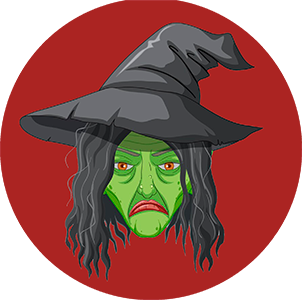
This witch was a wrinkled creature, hard of eye, thin-lipped, with hands that looked like roots of trees, and so tough was her skin that knife could not cut nor arrow pierce it. In the country that swept down to the sea she was greatly feared, and hated, too. The hate came because by some strange magic she was able to draw children to her one by one, and how she did it no man knew. But the truth is that she had a magic ball, a ball bright and shining and of many colours, and this she left in places where children played, but never where man or woman could see it.
One day, near the lake called Oretta, a brother and sister were at play and saw the magic ball at the foot of a little hill. Pleased with its brightness and beauty Natalia ran to it, intending to pick it up and take it home, but, to her surprise, as she drew near to it the ball rolled away; then, a little way off, came to rest again. Again she ran to it and almost had her hand on it when it escaped, exactly as a piece of thistle-down does, just as she was about to grasp it. So she followed it, always seeming to be on the point of catching it but never doing so, and as she ran her brother Luis followed, careful lest she should come to harm. The strange part of it was that every time the ball stopped it rested close to some berry bush or by the edge of a crystal-clear spring, so that she, like all who were thus led away, always found at the moment of resting something to eat or to drink or to refresh herself. Nor, strangely enough, did she tire, but because of the magic went skipping and running and jumping just as long as she followed the ball. Nor did any one under the spell of that magic note the passing of time, for days were like hours and a night like the shadow of a swiftly flying cloud.
At last, chasing the ball, Natalia and Luis came to a place in the valley where the Rio Chico runs between great hills, and it was dark and gloomy and swept by heavy gray clouds. The land was strewn with mighty broken rocks and here and there were patches of snow, and soon great snow flakes appeared in the air. Then boy and girl were terror-struck, for they knew with all the wandering and twisting and turning they had lost their way. But the ball still rolled on, though slower now, and the children followed. But the air grew keener and colder and the sun weaker, so that they were very glad indeed when they came to a black rock where, at last, the ball stopped.
Natalia picked it up, and for a moment gazed at its beauty, but for a moment only. For no sooner had she gazed at it and opened her lips to speak than it vanished as a soap bubble does, at which her grief was great. Luis tried to cheer her and finding that her hands were icy cold led her to the north side of the rock where it was warmer, and there he found a niche like a lap between two great arms, and in the moss-grown cranny Natalia coiled herself up and was asleep in a minute. As for Luis, knowing that as soon as his sister had rested they must set out about finding a way home, he sat down intending to watch. But not very long did he keep his eyes open, for he was weary and sad at heart. He tried hard to keep awake, even holding his eyelids open with his fingers, and he stared hard at a sunlit hilltop across the valley, but even that seemed to make him sleepy. Then, too, there were slowly nodding pine trees and the whispering of leaves, coming in a faint murmur from the mountainside. So, soon, Luis slept.
Natalia, being out of the blustering wind, was very comfortable in the little niche between the great stone arms, and she dreamed that she was at home. Her mother, she thought, was combing her hair and singing as she did so. So she forgot her hunger and weariness, and in her dream-land knew nothing of the bare black rocks and snow-patched hills. Instead, she seemed to be at home where the warm firelight danced on the walls and lighted her father’s brown face to a lively red as he mended his horse gear. She saw her brother, too, with his jet-black hair and cherry-red lips. But her mother, she thought, grew rough and careless and pulled her hair, so that she gave a little cry of pain and awoke. Then in a flash she knew where she was and was chilled to the bone with the piercing wind that swept down from the mountain top. Worse still, in front of her stood the old witch of the hills, pointing, pointing, pointing with knotty forefinger, and there were nails on her hands and feet that looked like claws.
Natalia tried to rise, but could not, and her heart was like stone when she found what had happened. It was this: while she slept, the witch had stroked and combed her hair, and meanwhile wrought magic, so that the girl’s hair was grown into the rock so very close that she could not as much as turn her head. All that she could do was to stretch forth her arms, and when she saw Luis a little way off she called to him most piteously. But good Luis made no move. Instead, he stood with arms wide apart like one who feels a wall in the dark, moving his hands this way and that. Then Natalia wept, not understanding and little knowing that the witch had bound Luis with a spell, so that there seemed to be an invisible wall around the rock through which he could not pass, try as he would. But he heard the witch singing in her high and cracked voice, and this is what she sang:
“Valley all pebble-sown,
Valley where wild winds moan!
Come, mortals, come.
“Valley so cool and white,
Valley of winter night,
Come, children, come.
“Straight like a shaft to mark,
Come they to cold and dark,
Children of men!”
Then she ceased and stood with her root-like finger up-raised, and from near by came the voice of a great white owl, which took up the song, saying:
“Things of the dark and things without name,
Save us from light and the torch’s red flame.”
Now all this was by starlight, but the moment the owl had ceased, from over the hill came a glint of light as the pale moon rose, and with a sound like a thunderclap the witch melted into the great rock and the owl flapped away heavily.
“Brother,” whispered the girl, “you heard what the owl said?”
“Yes, sister, I heard,” he answered.
“Brother, come to me. I am afraid,” said Natalia, and commenced to cry a little.
“Sister,” he said, “I try but I cannot. There is something through which I cannot pass. I can see but I cannot press through.”
“Can you not climb over, dear Luis?” asked Natalia.
“No, Natalia. I have reached high as I can, but the wall that I cannot see goes up and up.”
“Is there no way to get in on the other side of the rock, dear, dear Luis? I am very cold and afraid, being here alone.”
“Sister, I have walked around. I have felt high and low. But it is always the same. I cannot get through, I cannot climb over, I cannot crawl under. But I shall stay here with you, so fear not.”
At that Natalia put her hands to her face and wept a little, but very quietly, and it pained Luis to see the tears roll down her cheeks and turn to little ice pearls as they fell. After a while Natalia spoke again, but through sobs.
“Brother mine, you heard what the owl said?”
“Yes, sister.”
“Does it mean nothing to you?” she asked.
“Nothing,” he replied.
“But listen,” said Natalia. “These were the words: ‘Save us from light and the torch’s red flame.’ ”
“I heard that, Natalia. What does it mean?”
“It means, brother, that the things in this horrible valley fear fire. So go, brother. Leave me a while but find fire, coming back with it swiftly. There will be sickening loneliness, so haste, haste.”
Hearing that, Luis was sad, for he was in no mood to leave his sister in that plight. Still she urged him, saying: “Speed, brother, speed.”
Even then he hesitated, until with a great swoop there passed over the rock a condor wheeling low, and it said as it passed: “Fire will conquer frosted death.”
“You hear, brother,” said Natalia. “So speed and find fire and return before night.”
Then Luis stayed no longer, but waved his sister a farewell and set off down the valley, following the condor that hovered in the air, now darting away and now returning. So Luis knew that the great bird led him, and he ran, presently finding the river and following it until he reached the great vega where the waters met.
At the meeting of the waters he came to a house, a poor thing made of earth and stones snuggled in a warm fold of the hills. No one was about there, but as the condor flew high and, circling in the air, became a small speck, Luis knew that it would be well to stay a while and see what might befall. Pushing open the door he saw by the ashes in the fireplace that someone lived there, for there were red embers well covered to keep the fire alive. So seeing that the owner of the house would return soon he made himself free of the place, which was the way of that country, and brought fresh water from the spring. Then he gathered wood and piled it neatly by the fireside. Next he blew upon the embers and added twigs and sticks until a bright fire glowed, after which he took the broom of twigs and swept the earth floor clean.
How the man of the house came into the room Luis never knew, but there he was, sitting by the fire on a stool. He looked at things but said nothing to Luis, only nodding his head. Then he brought bread and yerba and offered some to Luis. After they had eaten the old man spoke, and this is what he said:
“Wicked is the white witch, and there is but one way to defeat her. What, lad, is the manner of her defeat? Tell me that.”
Then Luis, remembering what the condor had said, repeated the words: “ ‘Fire will conquer frosted death.’ ”
“True,” said the man slowly, nodding his head. “And your sister is there. Now here comes our friend the condor, who sees far and knows much.”
“Now with cold grows faint her breath,
Fire will conquer frosted death.”
Having said that the great bird wheeled up sharply.
But no sooner was it out of sight than a turkey came running and stood a moment, gobbling. To it the old man gave a lighted brand, repeating the words the condor had spoken.
Off sped the turkey with the blazing stick, running through marsh and swamp in a straight line, and Luis and the old man watched. Soon the bird came to a shallow lagoon, yet made no halt. Straight through the water it sped, and so swiftly that the spray dashed up on either side. High the turkey held the stick, but not high enough, for the splashing water quenched the fire, and seeing that, the bird returned, dropping the blackened stick at the old man’s feet.
“Give me another, for the maiden is quivering cold,” said the turkey. “This time I will run round the lake.”
“No. No,” answered the man. “You must know that when the water spirit kisses the fire king, the fire king dies. So, that you may remember, from now and for ever you will carry on your feathers the marks of rippling water.”
Down again swooped the condor and a little behind him came a goose, flying heavily. As before, the condor cried:
“Now with cold grows faint her breath,
Fire will conquer frosted death.”
then flew away again toward the witch mountain.
To the goose the old man gave a blazing stick and at once the brave bird set off, flying straight in the direction the condor had taken. Over vega and over lagoon she went, pausing only at a snowclad hilltop, because the stick had burned close to her beak. So she dropped it in the snow to get a better hold, and when she picked it up again there was but a charred thing. Sad enough the goose returned to the house, bearing the blackened stick, and begged to be given another chance.
“No. No,” said the old man. “The silver snow queen’s kiss is death to the fire king. That is something you must remember. From now on and for ever you must carry feathers of gray like the ashes. But here comes the condor and we must hear his message.”
Sadly then the goose went away, her feathers ash gray, and the condor wheeled low again, calling:
“Fainter grows the maiden’s breath,
Night must bring the frosted death,”
and having said, like an arrow he shot off.
No sooner had he gone than the long-legged, long-billed flamingo dropped to the ground.
“Your beak is long,” said the old man, “but fly swiftly, for the stick is short.”
The flamingo took the burning stick by the end and made straight for the mountain, racing with all possible speed. As for Luis, he made up his mind to tarry no longer and set off, running like a deer. But an ostrich, seeing him, spread her wings like sails and ran by his side. On her back Luis placed his hand, and with that help sped as fast as the flamingo. In the air the flamingo went like an arrow, resting not, although the blazing fire burned her neck and breast until it became pink and red. But that she heeded not. Straight up the valley and to the rock where Natalia was bound went she, and into a heap of dried moss on the south side of the rock she dropped the blazing stick. Up leaped the dancing flames, and with a tremendous noise the rock flew into a thousand pieces and the power of the witch was gone for ever. As for Natalia, she was at once freed, and with her gentle, cool hand stroked the breast of the flamingo so that the burns were healed, but as a sign of its bravery the bird has carried a crimson breast from that day to this. As for Natalia and Luis, they lived for many, many years in the valley, and about them birds of many kinds played and lived and reared their young, and the magic ball of the witch lived only in the memory of men.
📄 Fuente: Tales from silver lands

LA BOLA MÁGICA
(Un cuento del país Chuput)
Una bruja de ojos fríos vivía en las Cordilleras y, cuando empezaban a caer las primeras nieves, siempre estaba llena de alegría. De pie sobre una roca, gritaba como un vendaval y se frotaba las manos, porque le complacía ver la luna de invierno, el paisaje verde borrado, los valles blancos, los árboles cargados de nieve y las aguas negras y heladas. El invierno era su época de caza y comida, y en verano dormía. Por eso se sentía llena de una especie de alegría salvaje cuando había nubes plomizas y vendavales a la deriva; esperaba y observaba, siempre lista para saltar sobre las criaturas endurecidas por el hielo que vagaban hacia las tierras bajas más cálidas.
Esta bruja era una criatura arrugada, de ojos duros, labios finos, manos que parecían raíces de árboles, y su piel era tan dura que un cuchillo no podía cortarla ni una flecha perforarla. En el país que descendía hasta el mar era muy temida y también odiada. El odio surgió porque, por alguna extraña magia, ella era capaz de atraer a los niños uno por uno, y ningún hombre sabía cómo lo hacía. Pero la verdad era que tenía una bola mágica, una bola brillante y resplandeciente de muchos colores, que dejaba en lugares donde jugaban los niños, pero nunca donde hombres o mujeres pudieran verla.
Un día, cerca del lago llamado Oretta, un hermano y una hermana estaban jugando y vieron la bola mágica al pie de una pequeña colina. Complacida con su brillo y belleza, Natalia corrió hacia ella con la intención de recogerla y llevársela a casa, pero para su sorpresa, al acercarse, la bola se alejó rodando; luego, un poco más lejos, volvió a detenerse. Corrió de nuevo hacia ella y casi la agarró con la mano cuando se escapó, exactamente como lo hace un trozo de plumón de cardo justo cuando estaba a punto de atraparlo. Así que la siguió, siempre pareciendo estar a punto de atraparla pero sin lograrlo. Mientras corría, su hermano Luis la seguía con cuidado para que ella no sufriera daño. Lo extraño era que cada vez que la bola se detenía, se quedaba cerca de algún arbusto de bayas o al borde de un manantial de agua cristalina, de modo que ella, como todos los que así eran conducidos, siempre encontraba algo para comer, beber o refrescarse. Tampoco, por extraño que parezca, se cansó, sino que debido a la magia saltaba, corría y brincaba mientras seguía la pelota. Nadie bajo el hechizo de aquella magia notaba el paso del tiempo, pues los días eran como horas y la noche como la sombra de una nube que volaba velozmente.
Por fin, persiguiendo la pelota, Natalia y Luis llegaron a un lugar del valle donde corre el río Chico entre grandes cerros. Estaba oscuro, lúgubre y barrido por pesadas nubes grises. La tierra estaba sembrada de enormes rocas rotas y aquí y allá había parches de nieve; pronto grandes copos comenzaron a caer. Entonces los niños quedaron aterrorizados, porque sabían que, con tanto deambular, giros y vueltas, se habían perdido. Pero la pelota siguió rodando, aunque ahora más lentamente, y los niños la siguieron. El aire se hizo más intenso y frío, y el sol más débil, así que se sintieron muy contentos cuando llegaron a una roca negra donde, por fin, la pelota se detuvo.
Natalia la recogió y por un momento contempló su belleza, pero solo por un momento. Apenas la miró y abrió los labios para hablar cuando desapareció como una pompa de jabón, por lo que su dolor fue grande. Luis trató de animarla y, al ver que tenía las manos heladas, la llevó al lado norte de la roca, donde hacía más calor, y allí encontró un nicho, como un regazo entre dos grandes brazos de piedra. En la grieta cubierta de musgo, Natalia se acurrucó. Se levantó y se quedó dormida al cabo de un minuto. Luis, sabiendo que tan pronto como su hermana descansara debían emprender la búsqueda del camino a casa, se sentó con la intención de observar. Pero no mantuvo los ojos abiertos mucho tiempo, porque estaba cansado y triste de corazón. Intentó con todas sus fuerzas mantenerse despierto, incluso manteniendo los párpados abiertos con los dedos, y miró fijamente la cima de una colina iluminada por el sol al otro lado del valle, pero incluso eso parecía darle sueño. Luego también se oían los pinos balanceándose lentamente y el susurro de las hojas, que llegaba como un débil murmullo desde la ladera de la montaña. Así que pronto Luis se durmió.
Natalia, protegida del fuerte viento, estaba muy cómoda en el pequeño nicho entre los grandes brazos de piedra y soñó que estaba en casa. Su madre, pensó, la peinaba y cantaba mientras lo hacía. Olvidó su hambre y cansancio, y en la tierra de sus sueños no sabía nada de las desnudas rocas negras y las colinas cubiertas de nieve. En cambio, parecía estar en casa, donde la cálida luz del fuego bailaba en las paredes e iluminaba el rostro moreno de su padre con un rojo vivo mientras remendaba su equipo para montar a caballo. También vio a su hermano, con su cabello negro azabache y sus labios rojo cereza. Pero su madre, pensó, se volvió áspera y descuidada y le tiró del pelo, de modo que soltó un gritito de dolor y despertó. Entonces, en un instante supo dónde estaba y quedó helada hasta los huesos por el viento penetrante que bajaba desde la cima de la montaña. Peor aún, frente a ella estaba la vieja bruja de las colinas, señalando con su dedo índice nudoso, que tenía uñas en las manos y en los pies que parecían garras.
Natalia intentó levantarse, pero no pudo, y su corazón quedó como de piedra al descubrir lo sucedido. Era esto: mientras dormía, la bruja le había acariciado y peinado el cabello, y mientras tanto había obrado magia, de modo que el cabello de la niña crecía tan cerca de la roca que no podía ni siquiera girar la cabeza. Lo único que pudo hacer fue estirar los brazos, y cuando vio a Luis a poca distancia lo llamó lastimosamente. Pero el buen Luis no hizo ningún movimiento. En lugar de eso, permaneció con los brazos bien abiertos, como quien siente una pared en la oscuridad, moviendo las manos de un lado a otro. Entonces Natalia lloró, sin entender, sin saber que la bruja había atado a Luis con un hechizo, de modo que parecía haber un muro invisible alrededor de la roca a través del cual no podía pasar, por mucho que lo intentara. Pero escuchó a la bruja cantar con su voz aguda y quebrada, y esto es lo que cantó:
“Valle todo sembrado de guijarros,
¡Valle donde gimen los vientos salvajes!
Venid, mortales, venid.
Valle tan fresco y blanco,
Valle de la noche de invierno,
Venid, niños, venid.
Recto como un eje para marcar,
Vienen al frío y la oscuridad,
¡Niño de hombre!”
Luego cesó y se quedó con su dedo en forma de raíz levantado, y cerca llegó la voz de un gran búho blanco, que retomó la canción diciendo:
“Cosas de la oscuridad y cosas sin nombre,
Sálvanos de la luz y de la llama roja de la antorcha”.
Todo esto ocurrió a la luz de las estrellas, pero en el momento en que el búho cesó, desde más allá de la colina llegó un destello de luz cuando la pálida luna se elevó, y con un sonido como un trueno la bruja se fundió en la gran roca, mientras el búho se alejaba aleteando pesadamente.
—Hermano —susurró la niña—, ¿escuchaste lo que dijo la lechuza?
—Sí, hermana, lo escuché —respondió.
—Hermano, ven a mí. Tengo miedo —dijo Natalia y se puso a llorar un poco.
—Hermana —dijo—, lo intento pero no puedo. Hay algo por lo que no puedo pasar. Puedo ver, pero no puedo seguir adelante.
—¿No puedes trepar, querido Luis? —preguntó Natalia.
—No, Natalia. He llegado tan alto como puedo, pero el muro que no puedo ver sube y sube.
—¿No hay manera de entrar al otro lado de la roca, querido Luis? Tengo mucho frío y mucho miedo de estar aquí sola.
—Hermana, he caminado. Me he sentido alto y bajo. Pero siempre es lo mismo. No puedo pasar, no puedo trepar, no puedo arrastrarme por debajo. Pero me quedaré aquí contigo, así que no temas.
Ante eso, Natalia se llevó las manos a la cara y lloró un poco, muy silenciosamente, y a Luis le dolió ver las lágrimas rodar por sus mejillas y convertirse en pequeñas perlas de hielo al caer. Al rato Natalia volvió a hablar, pero entre sollozos:
—Hermano mío, ¿escuchaste lo que dijo la lechuza?
—Sí, hermana.
—¿No significa nada para ti? —preguntó ella.
—Nada —respondió.
—Pero escucha —dijo Natalia—. Estas fueron las palabras: “Sálvanos de la luz y de la llama roja de la antorcha”.
—Escuché eso, Natalia. ¿Qué significa?
—Significa, hermano, que las cosas en este horrible valle temen al fuego. Así que vete, hermano. Déjame un rato, pero encuentra fuego y regresa con él rápidamente. Habrá una soledad repugnante, así que apúrate, apúrate.
Al oír eso, Luis se entristeció, pues no estaba de humor para dejar a su hermana en esa situación. Aun así, ella lo instó diciendo: “Apresúrate, hermano, apresúrate”.
Incluso entonces vaciló, hasta que, con un gran descenso, pasó sobre la roca un cóndor volando agachado, y dijo al pasar: “El fuego vencerá a la muerte helada”.
—Ya oíste, hermano —dijo Natalia—. Así que acelera, encuentra fuego y regresa antes de que anochezca.
Entonces Luis no se quedó más; se despidió de su hermana con la mano y emprendió valle abajo, siguiendo al cóndor que flotaba en el aire, ora alejándose ora regresando. Luis supo que el gran pájaro lo guiaba, y corrió, encontrando luego el río y siguiéndolo hasta llegar a la gran vega donde se encontraban las aguas.
En el encuentro de las aguas llegó a una casa, una pobre construcción hecha de tierra y piedras, acurrucada en un cálido pliegue de las colinas. No había nadie por allí, pero cuando el cóndor voló alto y, dando vueltas en el aire, se convirtió en una pequeña mota, Luis supo que sería bueno quedarse un rato y ver qué podía pasar. Al abrir la puerta vio por las cenizas de la chimenea que alguien vivía allí, pues había brasas rojas bien cubiertas para mantener vivo el fuego. Viendo que el dueño de la casa volvería pronto, se liberó del lugar, que era la costumbre de aquel país, y trajo agua fresca del manantial. Luego recogió leña y la apiló cuidadosamente junto al fuego. Sopló sobre las brasas y añadió ramitas y palos hasta que ardió un fuego brillante, después de lo cual tomó la escoba de ramitas y barrió el suelo de tierra.
Luis nunca supo cómo entró el hombre de la casa en la habitación, pero allí estaba, sentado junto al fuego en un taburete. Miró las cosas, pero no le dijo nada a Luis, solo asintió con la cabeza. Luego trajo pan y yerba y le ofreció un poco a Luis. Después de comer, el anciano habló y dijo:
—Mala es la bruja blanca, y solo hay una forma de derrotarla. ¿Cuál es, muchacho, la forma de su derrota? Dime eso.
Entonces Luis, recordando lo que había dicho el cóndor, repitió las palabras: “El fuego vencerá a la muerte helada”.
—Es cierto —dijo el hombre lentamente, asintiendo con la cabeza—. Y tu hermana está allí. Ahora aquí viene nuestro amigo el cóndor, que ve lejos y sabe mucho.
—Ahora con el frío se le debilita el aliento,
El fuego vencerá a la muerte helada.
Dicho esto, el gran pájaro giró bruscamente.
Pero tan pronto como se perdió de vista, un pavo llegó corriendo y se quedó un momento, devorando. El anciano le dio un tizón encendido, repitiendo las palabras que había dicho el cóndor.
El pavo se alejó con el palo ardiente, corriendo a través de pantanos en línea recta, y Luis y el viejo observaron. Pronto el pájaro llegó a una laguna poco profunda, pero no se detuvo. Atravesó el agua a toda velocidad, y con tanta rapidez que el agua salpicó a ambos lados. El pavo sostuvo el palo en alto, pero no lo suficiente, porque el agua que salpicaba apagó el fuego, y al ver eso el pájaro regresó, dejando caer el palo ennegrecido a los pies del anciano.
—Día tras día,
Horas tras horas,
Los amigos luchan,
El fuego vencerá a la muerte helada.
Con voz triste dijo el anciano:
—No es suficiente para la batalla, es solo un incendio que se apaga con facilidad. Luis, debo darte un consejo: busca fuego grande, llama que no pueda apagarse, llama eterna.
Luis comprendió y salió a buscar un fuego que no se apagara. Caminó mucho tiempo, y al final llegó a un pueblo donde se realizaba una ceremonia, y allí vio una llama tan grande que parecía un dragón furioso, con lenguas y colas que ardían sin apagarse.
Reuniendo toda su fuerza, Luis tomó un gran trozo de madera encendida y salió corriendo hacia su hermana. Las llamas temblaban y saltaban, pero el fuego no se apagó ni un instante. Al llegar a la roca, vio que la bruja estaba allí, pero el fuego hizo que la vieja huyera, y entonces Natalia pudo liberarse. Y juntos, con el fuego que tenía Luis, volvieron a casa, dejando atrás el valle de la nieve y las rocas negras.
Cuento popular de Argentina, recopilado por Charles Joseph Finger (1869-1941) en Tales from silver lands, 1924