Ver transcripción original
XLI.—THE SONS’ OATH TO THEIR DYING FATHER.
There was an old man who had three sons and one daughter. When the time came for the old man to die, he summoned all his three sons, and made them promise under oath to give their sister to the first who came to ask for her, whoever he might be. When some time had elapsed after the father’s death, an old man arrived in a two-wheeler, and asked for the maiden in marriage. The two elder brothers would not give her to him immediately, because he was old and poor; but the youngest insisted that they should give her to him, reminding them of the oath they had sworn to their father. And so they gave her in marriage to the old man, and the old man took her away to his home. After some time, the elder brother went on a visit to his sister. When he got there, it was a large house, and couldn’t be better. The sister was greatly delighted when she saw her brother, and when he inquired of her how she was getting on, she replied: ‘Excellently; it can’t be better.’ When the brother arrived at his sister’s, the old man was not at home, but soon afterwards arrived, and was very pleased when he saw his wife’s brother, and said to him: ‘We will feast and be merry; but first you shall go on my horse to fetch him some grass, but you must cut it where the horse paws with his foot, and not where you please.’ His wife’s brother said to him: ‘Good! brother-in-law, I will.’ He then mounted the horse and went off. As on he went, he came to a silver bridge. When he espied the bridge and saw that it was all of silver, he became covetous, dismounted, and pulled off a silver plate, saying: ‘I may benefit myself.’ Afterwards he cut grass where he pleased, without waiting till the horse pawed with his foot, mounted the horse again, and returned back. On arriving at the house, he put the horse in the stable, placed the grass before him, and went off into the house. When he arrived in the house, the old man asked him whether he had satisfied the horse, and whether the horse was eating the grass. He replied, ‘Yes,’ and that the horse was eating. The old man said: ‘It is good that I also look.’ He then went into the stable. When he got there, the horse had not touched it. The old man understood that the grass had not been cut where he had told him; he therefore at once sent off his brother-in-law supperless, to go back whence he had come. On reaching home, he didn’t tell his brothers how he had fared at his brother-in-law’s, but said to the middle brother: ‘Our brother-in-law salutes you, and wishes you to go to be his guest.’ After some time, the middle brother went on a visit to his sister; but he, too, fared even as the first one. His sister’s husband sent him, too, for grass, and when he got to the silver bridge, he, too, became covetous, like the first, pulled off a silver plate, and did not cut the grass as his brother-in-law told him, but where he thought fit. When he came back to his brother-in-law’s house, his brother-in-law caught him, too, out in a lie, and sent him home supperless, like the first one. When he got home, he told nobody how he had fared at his brother-in-law’s, but said to the youngest brother: ‘Our brother-in-law salutes you, and wishes you to go to visit him.’
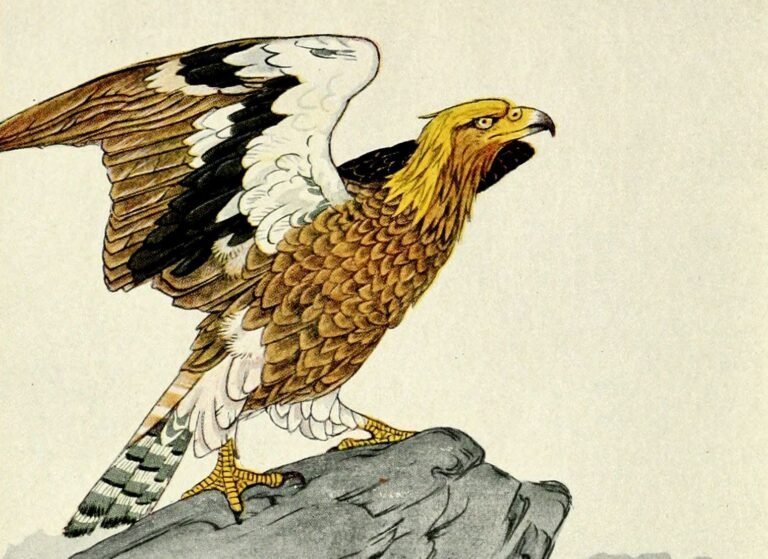
After some time, the youngest brother, too, went off. When his sister espied him, she said to him: ‘Only, brother, be sure not to do as our two brothers have done.’ He didn’t know what they had done, and his sister would not tell him anything more. When his sister’s husband came home, he, too, was delighted with his wife’s brother, and said to him: ‘We will feast and be merry, only go first on my horse and fetch him some grass; but you will cut it there where the horse paws with his foot, and not where you please.’ He mounted the horse and went off for the grass. When he arrived at the bridge, he was astonished at its beauty, but was quite sorry that it hadn’t those two plates; and when he came to the middle, he looked on one side and the other, and saw under it, where water was bubbling in a huge caldron, and human heads boiling in it, and eagles pecking them from above. Afterwards, having passed over the bridge, he came to a village, and, as he passed through it, saw that there everything was sad and sorrowful, and wondered thereat, and asked a man: ‘How is this, brother, that all is so sorrowful with you?’ He replied: ‘How should it not be sorrowful, when hail smites us every hour, and we have nothing.’ When he came out of the village, he found two pigs on the road, and they were fighting without ceasing. He tried to part them, but in vain, and, being unable to part them, went on further. Thus proceeding, he came to another village, and, as he went through, heard on all sides singing and merriment, and said to someone: ‘I went through one village and found everything sorrowful, and why is all so merry with you?’ The villager answered him: ‘Why should it not be so, when every hour is productive to us, and we have all in abundance?’ Finally, the horse carried him to a very beautiful meadow. When they were in the middle of the meadow, the horse stood still and pawed with his foot, and he dismounted and cut grass, and returned back to the house. When he got to the house, he led the horse into the stable, laid the grass before him, and the horse immediately began to eat. When his sister’s husband saw that he had satisfied the horse, he was very pleased, and said to him: ‘You are my true brother-in-law; now let us be merry and feast.’ Then they sat down to table and began to sup. At supper the old man said to him: ‘Now, tell me what you have seen.’ He answered him: ‘Oh, my brother-in-law! what I have seen cannot be expressed. First I saw a very beautiful silver bridge, but it was disfigured where it wanted a pair of plates. Whoever took these away, the living God hath slain him!’ The old man thereupon told him: ‘Your two brothers stole them. As they have done, so have they fared. But tell me what you saw next.’ His wife’s brother replied: ‘At the middle under the bridge I saw a huge caldron, where it was bubbling, and in it the heads of dead people, and eagles were pecking them from above.’ Thereupon his sister’s husband said: ‘Those are the eternal torments in that world. What did you see more?’ His wife’s brother continued: ‘I saw a village, and in it everything miserable.’ The old man said to him: ‘There there is no union and no truth, nor knowledge of God. What did you see further?’ His wife’s brother said to him further: ‘I saw two pigs fighting without ceasing.’ His sister’s husband replied: ‘Those are two brothers who do not live in concord. What did you see further?’ ‘I saw another village, and in it all was cheerful.’ His sister’s husband said to that: ‘Those are people after God’s will; they gladly welcome and entertain everybody, and do not drive the poor empty-handed from before their houses. Tell me what you saw further.’ His wife’s brother said to him: ‘I saw a very beautiful meadow. I would stay there three days to view such beauty.’ His sister’s husband replied: ‘That is the paradise of that world, but it is difficult to attain to it.’ After this they enjoyed each other’s society for many days. Finally, the wife’s brother declared that he must go home, and his sister’s husband presented him with a large gift, and told him that he recognised him immediately for an honourable man, because he had insisted that his father’s directions, which he had sworn to observe, should be carried out, and that he would be prosperous, and his two brothers unprosperous.
N.B.—There are two words for ‘brother-in-law’ in Servian: shura, the wife’s brother, and zet, the sister’s husband. This makes the tale read better in Servian than in English.
📄 Fuente: Sixty Folk-Tales from Exclusively Slavonic Sources

Había un anciano que tenía tres hijos y una hija. Cuando llegó el momento de morir, llamó a sus tres hijos y les hizo jurar que entregarían a su hermana al primero que viniera a pedirla, sea quien fuera.
Pasado un tiempo después de la muerte del padre, llegó un anciano en un carruaje de dos ruedas y pidió a la doncella en matrimonio. Los dos hermanos mayores no quisieron dársela enseguida porque el hombre era viejo y pobre; pero el hermano menor insistió en que debían cumplir la promesa hecha a su padre. Así, entregaron a la hermana en matrimonio al anciano, y él la llevó a su casa.
Al cabo de un tiempo, el hermano mayor fue a visitar a su hermana. Cuando llegó, vio que era una casa grande y espléndida. La hermana se alegró mucho de ver a su hermano, y al preguntarle cómo estaba, respondió:
—Muy bien, no podría estar mejor.
El hermano llegó a la casa, pero el anciano no estaba. Poco después apareció y, contento de ver al hermano de su esposa, le dijo:
—Vamos a celebrar y a alegrarnos; pero antes ve a buscar pasto para el caballo. Debes cortarlo donde el caballo pise con la pata, no donde tú quieras.
El cuñado respondió:
—¡Está bien!
Montó el caballo y se fue. Al llegar a un puente de plata, al verlo tan hermoso, se llenó de codicia, se bajó, y arrancó una placa de plata diciendo:
—Esto me servirá a mí.
Luego cortó el pasto donde quiso, sin esperar a que el caballo pisara. Montó y regresó. Al llegar, colocó el pasto ante el caballo, y entró a la casa.
El anciano preguntó si había satisfecho al caballo y si estaba comiendo.
—Sí —respondió—, el caballo está comiendo.
El anciano fue a ver al caballo y vio que no había tocado el pasto. Entonces entendió que no había seguido sus instrucciones y envió a su cuñado de regreso sin cenar.
Al volver, no contó a sus hermanos lo que había pasado, solo dijo al hermano del medio:
—Nuestro cuñado te manda saludos y te invita a visitarlo.
Pasado un tiempo, el hermano del medio fue a visitar a la hermana, y le ocurrió lo mismo que al primero. También él fue enviado a buscar pasto, y al llegar al puente de plata, se llenó de codicia, arrancó una placa y cortó el pasto donde quiso. Al regresar, el cuñado lo descubrió mintiendo y también lo envió de vuelta sin cenar.
Al llegar, no contó nada a nadie, y solo dijo al hermano menor:
—Nuestro cuñado te envía saludos y te invita a visitarlo.
Tiempo después, el hermano menor también fue.
Cuando su hermana lo vio, le dijo:
—Solo, hermano, no hagas como hicieron nuestros dos hermanos.
Él no sabía qué habían hecho, y ella no le contó más.
Cuando llegó el cuñado, también se alegró de ver al hermano de su esposa y le dijo:
—Vamos a festejar y a alegrarnos; pero primero ve a buscar pasto para el caballo. Debes cortarlo donde el caballo pise con la pata, no donde tú quieras.
Montó el caballo y partió. Al llegar al puente, admiró su belleza, pero lamentó que no tuviera las dos placas que sus hermanos habían robado. En el centro, miró a un lado y al otro y vio bajo el puente un gran caldero con agua burbujeante, dentro del cual hervían cabezas humanas, y sobre ellas águilas que las picoteaban.
Pasó el puente y llegó a un pueblo donde todo era triste y sombrío. Se preguntó por qué, y preguntó a un hombre:
—Hermano, ¿por qué está todo tan triste aquí?
El hombre respondió:
—¿Cómo no estarlo, si la piedra de granizo nos golpea cada hora y no tenemos nada?
Al salir del pueblo, encontró dos cerdos peleando sin cesar. Intentó separarlos, pero no pudo, y siguió su camino.
Llegó a otro pueblo donde todo era alegría y canto. Preguntó:
—Pasé por un pueblo triste, ¿por qué aquí todo es tan alegre?
Le respondieron:
—Porque aquí todo es productivo y tenemos de sobra.
Finalmente, el caballo lo llevó a un prado muy hermoso. En medio del prado, el caballo se detuvo y pisó con la pata; entonces el hermano desmontó, cortó pasto y regresó.
Al llegar, llevó al caballo al establo y puso el pasto delante de él, que comenzó a comer de inmediato. El cuñado, al ver que había satisfecho al caballo, se alegró mucho y dijo:
—Eres mi verdadero cuñado; ahora celebremos.
Se sentaron a la mesa y cenaron. Durante la cena, el anciano preguntó:
—Cuéntame, ¿qué has visto?
Respondió:
—¡Hermano, no se puede explicar! Primero vi un puente de plata muy hermoso, aunque le faltaban dos placas. ¡Quien las haya robado, Dios lo haya castigado!
El anciano dijo:
—Tus dos hermanos las robaron, y les fue como les fue. ¿Qué más viste?
—Vi un caldero grande bajo el puente, con cabezas humanas hirviendo y águilas picoteándolas.
El anciano dijo:
—Es el tormento eterno en el otro mundo. ¿Qué más viste?
—Vi un pueblo donde todo era miserable.
—Allí no hay unión, verdad ni conocimiento de Dios —dijo el anciano.
—Vi también dos cerdos peleando sin cesar.
—Son dos hermanos que no viven en concordia —dijo el anciano.
—Vi otro pueblo donde todo era alegre.
—Son personas que viven según la voluntad de Dios, que acogen y ayudan a todos sin echar al pobre. ¿Qué más viste?
—Vi un prado hermoso, donde me quedaría tres días solo para contemplar su belleza.
—Es el paraíso de este mundo, pero es difícil alcanzarlo —dijo el anciano.
Disfrutaron la compañía durante varios días. Finalmente, el hermano dijo que debía irse, y el cuñado le dio un gran regalo y le dijo que había reconocido en él a un hombre honorable, porque insistió en cumplir el juramento hecho a su padre, y que él tendría prosperidad, mientras que sus dos hermanos no.
Cuento popular búlgaro, recopilado por A. H. Wratislaw en Sixty Folk-Tales from Exclusively Slavonic Sources, en 1890